Written By: Risa Toth, Business Development Manager, Excel Scientific
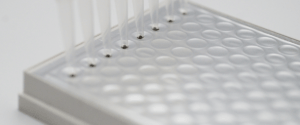
Anyone who’s run PCR knows that even tiny changes in volume can throw off results. Evaporation during thermal cycling doesn’t just reduce samples, it alters reagent ratios, creates edge effects, and undermines reproducibility.
The right sealing film can make all the difference. Mitigating evaporation isn’t just about instrument calibration, it’s also about choosing the right sealing strategy.
Practical Implementation Tips for Labs
- Match seal to workflow needs:
- Choose the foil if sampling mid-run or minimizing oxygen/light exposure matters.
- Opt for transparent film when visual inspection or clean removal matters.
- Validate sealing parameters:
- Different plastics and plate geometries may demand modest adjustments to time/temp.
- Avoid edge inconsistencies:
- Ensure uniform sealing across plate; uneven seals can still allow evaporation at edges.
- Monitor film compatibility:
- For concurrent labels or barcodes, transparent film lets you verify alignment visually.
- Consider resealing practices:
- Foil seals that support resealing can be valuable in multi-phase assays or storage workflows.
Two Ways to Seal with Confidence
AdvanceSeal™ 2000 Pierceable Foil
A durable aluminum foil that locks out moisture, gas, and light. Its pierceable surface is ideal for automation or multi-step workflows, with the added advantage of resealing.
AdvanceSeal™ 1000 Transparent Peelable Film
A clear, peelable option that protects samples while allowing easy visibility and labeling. Designed for clean removal, it performs reliably even after cold storage.
Choosing What Works Best
- Pick foil for maximum protection and repeated access.
- Choose transparent film when visibility and easy plate handling matter most.
The Hidden Cost of Evaporation in PCR Workflows
- Volume drift due to evaporation shifts reagent ratios.
- Inconsistent amplification efficiency across wells undermines data reliability.
- Edge effects in thermal cyclers exacerbate variability, particularly in low-volume reactions (e.g., < 20 µL).
- Sample contamination risk increases when plates are left unsealed or seals fail.
The Takeaway
Evaporation control is essential for PCR accuracy. By pairing thermal cycling with the right sealing approach, labs can protect integrity, reduce variability, and trust the data that drives their discoveries.